This Washington Post article provides an interesting comparison of President Trump’s threat to close the U.S.-Mexico border and Nixon’s 1969 Operation Intercept. Operation Intercept was a plan created in the fall of 1969, which intended to stop the influx of drugs - like marijuana and heroin - into the United States. However, the near shutdown of the border was really a publicity stunt, intending to prove that the new Nixon administration was serious about the war on crime and the anti-drug campaign. Although Nixon demonstrated how detrimental a border closure can be financially, President Trump has not withdrawn his threat. The decision would be act as a stunt to demonstrate that the president, in his own words, is “not playing games” when it comes to illegal immigration. According to his top aides, Trump is not bluffing this time. It will be fascinating to see if the president goes through with this dramatic order, and how the 2019 economic consequences will compare to 1969’s.
Sunday, March 31, 2019

Thursday, March 28, 2019
Cold War
What was the Union of Soviet Socialist Republics? (It included Russia, but the two things were not the same.)
Scary Nikita:
\
FOR MUCH OF THE COLD WAR, AMERICANS WERE NOT CONFIDENT THAT THE USSR WOULD CRUMBLE.
Whittaker Chambers on abandoning his life as a Soviet spy: "I wanted my wife to realize clearly one long-term penalty, for herself and for the children, of the step I was taking. I said: `You know, we are leaving the winning world for the losing world.' ... Almost nothing that I have observed, or that has happened to me since, has made me think that I was wrong about that forecast."

Nixon on ABM and SALT
From the State Dept:
Kissinger and Brezhnev (Hoff 184)
Dictator Humor:
Soviet Jews: take your pick on which is the real Nixon
RN: The Memoirs of Richard Nixon, page 876:
One of the many "Holy Crap!" moments of the Nixon years:
<br />
Scary Nikita:
\
FOR MUCH OF THE COLD WAR, AMERICANS WERE NOT CONFIDENT THAT THE USSR WOULD CRUMBLE.
Whittaker Chambers on abandoning his life as a Soviet spy: "I wanted my wife to realize clearly one long-term penalty, for herself and for the children, of the step I was taking. I said: `You know, we are leaving the winning world for the losing world.' ... Almost nothing that I have observed, or that has happened to me since, has made me think that I was wrong about that forecast."

Nixon on ABM and SALT
They [the Soviets] deployed more than a hundred intercontinental ballistic missiles (ICBMs) while we deployed none; they added several nuclear missile-firing submarines to their Navy while we added none; and they deployed forty new ABMs around Moscow. We knew that even as the debate in Congress over an American ABM was raging, the Soviets had initiated work on more ICBMs and ABMs, as well as major new radar systems in conjunction with their deployment; they were also building additional submarine missiles. I felt that tactically we needed the ABM as a bargaining chip for negotiations with the Soviets: they already had an ABM system, so if we went into negotiations without one we might have to give up something else, perhaps something more vital. In that sense, we had to have it in order to be able to agree to forgo it. I tried to persuade Congress that what the ABM vote represented was really a philosophical turning point in America’s strategic credibility.
From the State Dept:
The administration ultimately won the ABM battle. Congress did not actually pass the bill authorizing spending on defense projects, including the ABM, until November 9. But the Senate effectively approved Safeguard on August 6 [1969], when, by votes of 51–49 and 50–50, it defeated amendments that, if adopted, would have prohibited all funding for the system’s deployment. Vice President Agnew cast the tie-breaking ballot in the latter vote. The next day Nixon wrote a memorandum in which he directed Kissinger, Ehrlichman, and H.R. Haldeman to get “out the true story,” which was that the ABM victory was a result and reflection of the “Nixon Style.” The President urged them to “point out that RN made the decision to tackle ABM head on against the advice of most of his major advisers, including particularly the State Department.”
...
In his memoirs, Nixon concluded, “I am absolutely convinced that had we lost the ABM battle in the Senate, we would not have been able to negotiate the first nuclear arms control agreement in Moscow in 1972.” (Nixon, RN, page 418)
Kissinger and Brezhnev (Hoff 184)
Dictator Humor:
Soviet Jews: take your pick on which is the real Nixon
RN: The Memoirs of Richard Nixon, page 876:
I have never had any illusions about the brutally repressive nature of Soviet society. But I knew that the more public pressure we placed on Soviet leaders, the more intransigent they would become…. I felt that we could accomplish a great deal more on the Jewish emigration issue when we were talking with the Soviets than when we were not. Although we did not publicly challenge the Soviet contention that these questions involved Soviet internal affairs, both Kissinger and I raised them privately with Brezhnev, Gromyko, and Dobrynin. This approach brought results…. [T]he statistics are proof of undeniable success: from 1968 to 1971 only 15,000 Jews were allowed to emigrate. In 1972 alone, however, the number jumped to 31,400. In 1973, the last full year of my presidency, nearly 35,000 were permitted to leave.One of the emigrants was a young Felix Sater
One of the many "Holy Crap!" moments of the Nixon years:
<br />
Tuesday, March 26, 2019
Nixon: Foreign Policy Overview
"Nixon had promised as a presidential candidate in 1968 that he had a secret plan to end the war" (Schoen, p. 59). WRONG!!!!!!!!!!!!!!!!!!!!!!!!!!!!!!!!!!!!!!!!!!!!!!!!!!!!!!!!!!!!
Nixon and Foreign Policy
In Foreign Affairs (Schoen 67; reread Matthews 256-257), Nixon deliberately sends a signal to Beijing:

Secrecy and the Pentagon Papers
Richard Nixon remembers the Pentagon Papers from UVA's Miller Center on Vimeo.
- The Bay of Pigs Invasion and its Aftermath, April 1961–October 1962
- The Cuban Missile Crisis, October 1962
- Alliance for Progress and Peace Corps, 1961–1969
- The Limited Test Ban Treaty, 1963
- USSR deposes Khrushchev
- U.S. Involvement in the Vietnam War: the Gulf of Tonkin and Escalation, 1964
- The India-Pakistan War of 1965
- The 1967 Arab-Israeli War
- U.S. Involvement in the Vietnam War: The Tet Offensive, 1968
- Soviet Invasion of Czechoslovakia, 1968
- The Nuclear Non-Proliferation Treaty (NPT), 1968
- The Allende Years and the Pinochet Coup, 1969–1973
- Détente and Arms Control, 1969–1979
- The South Asia Crisis and the Founding of Bangladesh, 1971
- Nixon and the End of the Bretton Woods System, 1971–1973
- Strategic Arms Limitations Talks/Treaty (SALT) I and II
- Rapprochement with China, 1972
- The 1973 Arab-Israeli War
- Oil Embargo, 1973–1974
- Ending the Vietnam War, 1969–1973
Nixon and Foreign Policy
In Foreign Affairs (Schoen 67; reread Matthews 256-257), Nixon deliberately sends a signal to Beijing:
Taking the long view, we simply cannot afford to leave China forever outside the family of nations, there to nurture its fantasies, cherish its hates and threaten its neighbors. There is no place on this small planet for a billion of its potentially most able people to live in angry isolation. But we could go disastrously wrong if, in pursuing this long- range goal, we failed in the short range to read the lessons of history.Nixon (From In The Arena):
- "In competing with Moscow, we will at times find it necessary to cooperate with allies and friends who do not live up to our democratic standards."
- "Geopolitically, we should base our policies toward a country primarily on what its government does outside, not inside its borders."
Kissinger
- 1923: Born in Furth, Germany
- 1938: Family flees the Holocaust, settles in New York
- 1940-43: Attends City College
- 1943-47: Serves in US Army in the Battle of the Bulge and postwar Germany
- 1947-50: Harvard undergraduate
- 1950-54: Harvard Ph.D. study. Kissinger's A World Restored -- a published version of his Harvard dissertation -- lays out his philosophy. Kissinger dedicates it to Professor William Y. Elliott, father of CMC professor Ward Elliott and Pomona professor David Elliott.
- 1954-1968: Harvard Gov Dept
- 1969 -- gains power in National Security Decision Memorandum 2 (Hoff 160)
Richard Nixon remembers the Pentagon Papers from UVA's Miller Center on Vimeo.
Sunday, March 24, 2019
Ping Pong Diplomacy and Watergate Scandal in Forrest Gump
Before spring break, we discussed Nixon's portrayal in the media and the mention of ping pong diplomacy in the Schoen reading reminded me of this scene in Forrest Gump. There are a lot of great connections to the material we've looked at in class throughout the film but I really enjoyed these two clips of ping pong diplomacy and Forrest's connection to Watergate.
Thursday, March 21, 2019
Trump v. Nixon?
I came across this video on the problems that arise from comparing Trump's scandals to Watergate, and why it can sometimes be inaccurate and unproductive to draw these parallels.
One the biggest differences that the video claims distinguishes the two scandals is the media landscapes that surrounded each administration. Before the advent of blogs, push notifications, and Twitter, most Americans received what were essentially the "same news". This draws contrast to today's specialized news channels each designed to appeal to certain political orientations, which in turn present information in a way that will appeal to their viewers. The video notably draws on the rise of Fox News as a tenet of the Trump administration and its ensuing policy priorities – and the ways in which the rise of this specialized right-wing media has transformed American politics.
Thursday, March 14, 2019
Hipster Day: Nixon on a Basic Income and Health
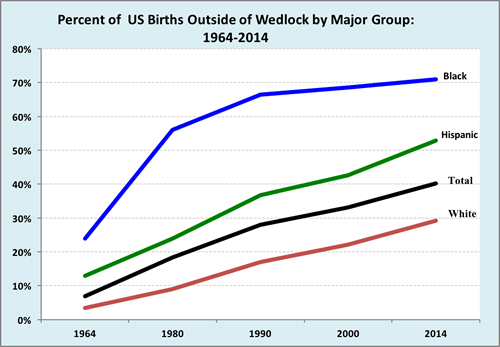
Progress Against Poverty Stalled as the War on Poverty Started
Backstory: The Moynihan Report
x
The Welfare Shift
For 2018
Gary L. Freed, Anup Das, "Nixon or Obama: Who Is the Real Radical Liberal on Health Care?" Pediatrics 136 (August 2015)

Backstory: The Moynihan Report
x
The Welfare Shift
For 2018
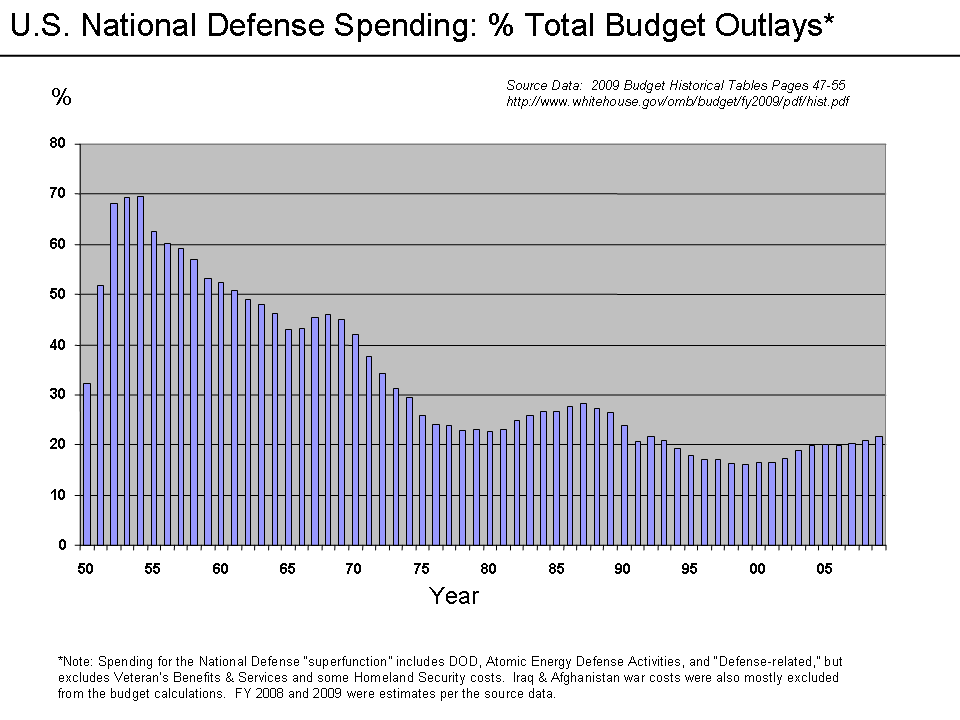
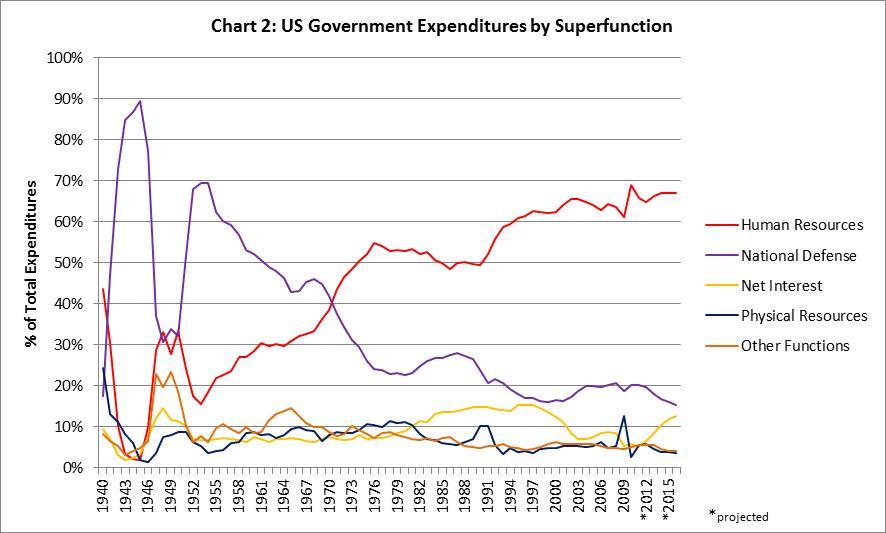
- Defense: 15.4%
- Human Resources: 70.7%
Gary L. Freed, Anup Das, "Nixon or Obama: Who Is the Real Radical Liberal on Health Care?" Pediatrics 136 (August 2015)
| Nixon National Health Strategy 19714 | ACA 20103,6 |
|---|---|
| National Health Insurance Partnership | Employer-Shared Responsibility |
| (1) Require employers to provide basic health insurance coverage for their employees, with the minimum requirement being to pay for hospital services, inpatient and outpatient physician services, full maternity care, well-infant care, immunizations, laboratory services, certain other medical expenses, and minimum of $50 000 in catastrophic coverage | (1) Employers with at least 50 full-time employees must offer health coverage that is affordable and provides a minimum level of benefits to at least 95% of their employees and dependents. None of their employees can receive a premium tax credit to help pay for coverage on a marketplace; if so, the employer must make a shared responsibility payment |
| (2) The costs for this would be shared by employers and employees, with a 35% ceiling on employee contribution for the first 2.5 years, and 25% after that | (2) Affordable coverage is defined as ≤9.5% of an employee’s annual household income |
| (3) Keep the range within which benefits can vary narrower than it has been, so competition between insurance companies will be more likely to compete on overall price of contracts | (3) A plan provides the minimum level of coverage if it covers at least 60% of the total allowed cost of benefits |
| (4) Small employers are exempt from the coverage requirement and allow them to purchase insurance through the small business health options program | |
| (4) Require the establishment of special insurance pools in each state that would offer insurance at reasonable group rates to people who did not qualify for other programs: the self-employed or poor-risk individuals | |
| (5) Small employers with up to 25 employees and average annual wages less than $50 000 are eligible to receive a tax credit | |
| Medicaid | Medicaid Expansion |
| (1) Implement the Family Health Insurance Plan to meet the needs of poor families by eliminating the part of Medicaid that covers most welfare families. In its place, develop a new insurance plan that is fully financed and administered by the federal government. This federal health insurance plan would provide insurance to all poor families with children headed by self-employed or unemployed persons whose income is below a certain level. As family income increases, the cost-sharing would increase through a graduated schedule of premium charges, deductibles, and coinsurance payments | (1) Provide funding to states to expand their Medicaid programs to cover non–Medicare-eligible individuals younger than 65 with incomes up to 133% of the federal poverty line |
| (2) Guarantee all newly eligible individuals a benchmark insurance package that includes the minimum benefits for plans in the marketplace | |
| (3) Finance the coverage for the newly eligible with federal dollars until 2016, and then gradually decrease the federal contribution to 90% by 2020 | |
| (4) Increase Medicaid payments in fee for service and managed care for primary care services to 100% of Medicare payment rates | |
| Nixon Comprehensive Health Insurance Plan 19745 | |
| Employee Health Insurance | |
| (1) Require all employers to offer all full-time employees health insurance, with employee contribution at 35% for 3 years, and then 25% subsequently | |
| (2) Use federal subsidies to ease initial burden on employers | |
| (3) Specific deductible, coinsurance, and out-of-pocket limits under this insurance plan | |
| Assisted Health Insurance | |
| (1) Replace state-run Medicaid by implementing a federally administered insurance plan to cover anyone not offered coverage under the Employee Health Insurance or Medicare | |
| (2) Individuals could also get this if they cannot get coverage at reasonable rates from other options |
Wage-Price Controls (Schoen 45-47): A Rare Admission of Error
What did America reap from its brief fling with economic controls? The August 15, 1971 decision to impose them was politically necessary and immensely popular in the short run. But in the long run I believe that it was wrong. The piper must always be paid, and there was an unquestionably high price for tampering with the orthodox economic mechanisms.
Research Paper
In this assignment, you will write a research paper on any Nixon-related topic of your choice. Here are some options, but you are free to choose another, as long as it is Nixon-centric. During the two weeks of April, you will each make a 5-minute Power-Point-free class presentation on your topic. (You may post graphs or video clips on the class blog.)
- Analyze a depiction of Nixon in a movie, novel, play, or TV show. What is the literary or political purpose of the portrayal? Is it accurate, or at least true to Nixon's character?
- Explain a major Nixon decision in foreign policy or national security. What military, diplomatic and political considerations went into his choice? And what do we know now that was not public knowledge at the time?
- Choose any major figure in Nixon's life (not counting anyone you may have written about in the second assignment). How did this person influence Nixon's life and career? Did this person serve as friend, foe, mentor, foil, punching bag -- or some combination thereof? What did Nixon gain or lose as a result of the relationship? In your answer, consider the historical circumstances that allowed this person to have this influence.
Document your claims. Do not write from the top of your head.
- Essays should be typed (12-point), double-spaced, and no more than eight pages long. I will not read past the eighth page. As always, please submit papers to the Sakai dropbox as Word documents, not pdfs.
- Cite your sources with endnotes in Chicago/Turabian style. Endnote pages do not count against the page limit.
- Watch your spelling, grammar, diction, and punctuation. Errors will count against you.
- Due date is 11:59 PM on April 12. Papers will drop a gradepoint for one day's lateness, a full letter grade after that.
Subscribe to:
Posts (Atom)